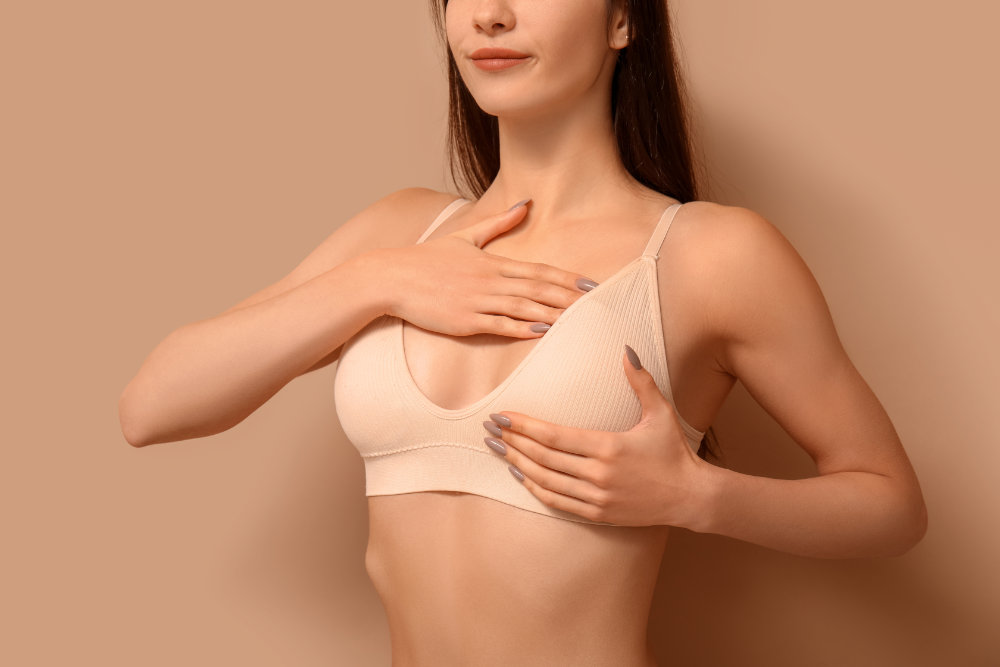
To many women who haven’t undergone either procedure, breast augmentation and breast lift surgery sound like the same thing. But while both procedures improve the appearance of the breasts, they address very different concerns. Choosing the right procedure depends on what specifically bothers you about your breasts today, not what the procedure names sound like.
If your breasts look deflated after pregnancy, weight loss or aging, implants may help restore fullness. If your breasts sag, point downward or sit lower on the chest than they once did, a breast lift may be more appropriate. Some women experience both concerns simultaneously and benefit from combining procedures.
Understanding the difference between breast augmentation and breast lift surgery can help you make a more informed decision and achieve results that actually match your goals.
What Is Breast Augmentation?
Breast augmentation is a procedure designed to increase breast volume and improve fullness. This is typically achieved using saline or silicone breast implants, though fat transfer may also be an option for select patients.
The primary goal of breast augmentation is size enhancement and shape improvement. Many patients choose breast augmentation because they:
- Naturally have smaller breasts
- Lost upper breast fullness after pregnancy or breastfeeding
- Experienced volume loss following weight changes
- Want improved symmetry
- Desire fuller cleavage or more projection
At New Reflections Plastic Surgery, breast augmentation is customized based on each patient’s anatomy, lifestyle and aesthetic goals. Implant type, implant size, placement technique and overall proportions all play a role in creating natural-looking results.
What Breast Augmentation Can Improve
Breast augmentation is best for patients whose main concern is volume rather than sagging. Implants can:
- Increase breast size
- Improve upper pole fullness
- Enhance cleavage
- Restore lost fullness after pregnancy
- Improve breast symmetry
- Create a rounder or more projected shape
However, implants alone do not significantly correct sagging breasts. This is one of the biggest misconceptions patients have when researching breast surgery.
What Is a Breast Lift?
A breast lift, also called mastopexy, reshapes and elevates the breasts by removing excess skin and tightening surrounding tissue.
Unlike breast augmentation, a breast lift is not primarily designed to make the breasts larger. Instead, the procedure focuses on correcting breast position and improving contour.
A breast lift may be recommended if you notice:
- Sagging or drooping breasts
- Nipples pointing downward
- Nipples sitting below the breast crease
- Stretched skin after pregnancy or weight loss
- Flattened breast shape
- Enlarged areolas
During breast lift surgery, the breasts are repositioned higher on the chest wall for a firmer, more youthful appearance. Excess skin is removed, and the nipple-areola complex can also be repositioned for better proportion.
What a Breast Lift Can Improve
A breast lift is often the better option when the issue is breast position rather than breast size. A lift can:
- Elevate sagging breasts
- Reposition downward-pointing nipples
- Improve breast shape
- Tighten stretched skin
- Create a perkier breast contour
- Restore a more youthful appearance
However, a breast lift alone does not significantly increase breast volume. In fact, some patients feel their breasts appear slightly smaller after a lift because excess skin has been removed and the tissue is more compactly reshaped.
How to Tell Which Procedure You Actually Need
The easiest way to understand whether you need a breast augmentation or a breast lift is to evaluate what bothers you most about your breasts.
You May Need Breast Augmentation If…
Your breasts sit in a relatively youthful position, but appear:
- Smaller than desired
- Deflated
- Less full after pregnancy or weight loss
- Uneven in size
- Lacking upper fullness
Patients who primarily want larger breasts or enhanced cleavage are usually better candidates for breast augmentation.
You May Need a Breast Lift If…
Your breasts have adequate volume but appear:
- Droopy or elongated
- Flattened
- Lower on the chest
- Loose or stretched
- Associated with nipples pointing downward
If your nipples sit below the breast fold or your breast tissue hangs significantly, a breast lift is often necessary to achieve meaningful improvement.
You May Need Both Procedures If…
Many women experience both volume loss and sagging at the same time, especially after pregnancy, breastfeeding, major weight fluctuations, or aging.
In these cases, combining breast augmentation with a breast lift may provide the most balanced and natural-looking result. This combination procedure is sometimes referred to as augmentation-mastopexy.
Combining procedures can:
- Restore lost fullness
- Lift sagging tissue
- Improve breast shape
- Increase upper pole volume
- Create better overall breast proportion
Patients often choose this approach when they want fuller breasts but also need correction for sagging that implants alone cannot fix.
Why Implants Alone Cannot Correct Significant Sagging
One of the most common mistakes patients make is assuming that larger implants will “fill out” sagging breasts enough to avoid a lift.
While implants can create mild lifting in some cases, they cannot remove excess skin or reposition significantly drooping nipples. In fact, using overly large implants to compensate for sagging may eventually worsen stretching and lead to additional drooping over time.
If substantial sagging is present, implants without a lift may result in:
- Bottom-heavy breasts
- Nipples sitting too low
- An unnatural appearance
- Increased skin stretching
- Poor long-term support
This is why a consultation with an experienced plastic surgeon is so important. The right procedure should address the actual anatomical issue rather than simply increasing size.
What Are the Common Causes of Breast Changes?
Many women considering breast surgery notice changes due to:
Pregnancy and Breastfeeding
Pregnancy can significantly alter breast volume, skin elasticity and breast position. After breastfeeding, some women experience loss of fullness, while others develop sagging or stretched skin.
Weight Loss
Significant weight loss can reduce breast volume and leave behind excess skin, contributing to a deflated or less supported appearance. Because breasts contain a large amount of fatty tissue, fluctuations in body weight can noticeably affect breast size and shape.
Patients who lose a substantial amount of weight may notice that their breasts appear flatter, lower on the chest, or less firm than before their weight loss journey.
Aging
Over time, natural aging and gravity affect skin elasticity and the supportive structures within the breasts. Collagen and elastin production gradually decrease with age, making the skin less firm and resilient.
This can lead to drooping, flattening, loss of upper fullness and overall changes in breast contour. These changes are a normal part of the aging process and may continue gradually over the years.
Genetics
Some women naturally have more breast laxity or lower breast positioning due to inherited anatomy. Genetics can influence breast density, skin quality, breast shape and how the breasts respond to aging, pregnancy or weight fluctuations.
Even women who have never been pregnant or experienced major weight changes may develop sagging or asymmetry simply because of their natural anatomy and tissue characteristics.
What Happens During Consultation?
A consultation is one of the most important parts of the breast surgery process. During your appointment, your surgeon will evaluate:
- Breast size and volume
- Degree of sagging
- Skin quality and elasticity
- Nipple position
- Chest wall anatomy
- Overall body proportions
At New Reflections Plastic Surgery, treatment recommendations are tailored to the patient’s specific anatomy and goals rather than applying a generic approach to every case.
This is also when patients discuss implant options, incision placement, expected scarring, recovery timelines and desired outcomes.
Recovery Differences Between Breast Lift and Breast Augmentation
Recovery varies depending on the procedure performed and whether procedures are combined.
Breast Augmentation Recovery
Most breast augmentation patients experience swelling, tightness and soreness during the first few weeks. Many return to desk work within several days to one week, though strenuous activity is restricted longer.
Breast Lift Recovery
Breast lift recovery also involves swelling and soreness, but patients may experience additional tightness due to skin reshaping and tissue repositioning.
Combined Procedure Recovery
When a breast lift and augmentation are combined, recovery may be slightly more involved because multiple surgical goals are addressed simultaneously. However, many patients appreciate undergoing a single recovery period instead of scheduling separate surgeries.
Will Scarring Be Different?
Scarring depends largely on the procedure being performed. Breast augmentation scars are often smaller and may be hidden in the breast fold, around the areola, or in the underarm area, depending on implant placement technique.
Breast lift surgery usually involves more visible incisions because excess skin must be removed to reshape and elevate the breasts. The extent of scarring depends on how much lifting is required.
Over time, scars generally continue to fade and soften.
Choosing the Right Procedure for Your Goals
The best breast procedure is not necessarily the one that creates the largest change; it is the one that addresses your actual concerns.
If your breasts are simply smaller than you would like, breast augmentation may be enough. If your breasts have dropped lower on the chest or your nipples point downward, a lift may be necessary. If you want both more fullness and a lifted appearance, combining procedures may produce the best outcome.
Every patient’s anatomy is different, which is why personalized surgical planning matters so much.
Learn More About Breast Enhancement at New Reflections Plastic Surgery
Whether you are considering breast augmentation, a breast lift or a combination procedure, understanding your options is the first step toward achieving results that feel natural and proportional to your body.
At New Reflections Plastic Surgery, Dr. Nikesh Patel provides personalized treatment plans tailored to each patient’s anatomy, goals and long-term outcomes. A consultation can help determine which approach best fits your needs and what type of outcome may be possible based on your individual anatomy.